


- 2026-05-20
- 2026-05-20
- 2026-05-20
- 2026-05-20
- 2026-05-20
- 2026-05-20
- 2026-05-20
- 2026-05-20
- 2026-05-20
- 2026-05-20
This article understands the classification and analysis of advantages and disadvantages of waterborne alkyd resin [essence]]
today, small make up to introduce waterborne alkyd resin. In order to complete this creation, Xiaobian specially went to the laboratory, did the experiment himself, and got in touch with the engineer. Under the hand-in-hand teaching of the chief engineer of technology, Xiaobian began to make water-based alkyd resin. The process is still very complicated, and it is still very difficult for Xiaobian. So, after returning home, Xiaobian began to learn some knowledge about water-based alkyd resin. Next, Xiao Bian will tell you what he knows. Let's have a look ~ ~ ~
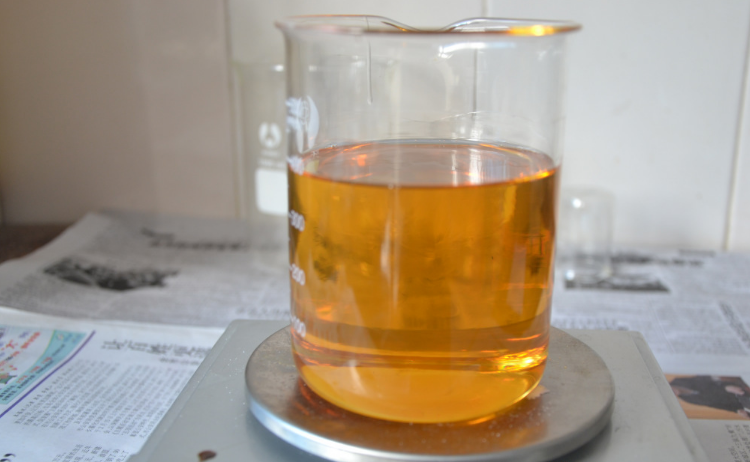
waterborne alkyd resin is widely used in general metal furniture protection, and low price, variety, is an important coating resin, then you know the advantages and disadvantages of waterborne alkyd resin.
Classification of waterborne alkyds
According to the appearance of water-based alkyd, water-based alkyd can be divided into water-emulsified and water-soluble two types, although the appearance of a larger difference, but the molecular structure of the two is basically similar.
The preparation of water-emulsified alkyd resin is to synthesize solvent-free alkyd resin (the same as solvent-based alkyd synthesis step), and then emulsify the water-emulsified alkyd resin with high-speed shear dispersion under the presence of emulsifier and protective glue. The viscosity of the resin with high oil content is small, the particle size after emulsification is often low, and the stability of the emulsion is better. When the oil degree is reduced, the viscosity of the resin is often larger, and the particle size of the water-based alkyd emulsion is larger after emulsification. Emulsifiers typically used to emulsify alkyd resins are nonionic surfactants. Protective glue is generally used polyvinyl alcohol or sodium polymethacrylate, etc., the storage performance of water-based alkyd emulsion emulsified by emulsifier is often poor, at the same time, due to the existence of small molecule emulsifier, the performance of the product after film formation is not very ideal.
The water-soluble alkyd resin paint film has high gloss and does not need film-forming additives in the film-forming process. Its preparation principle is to prepare alkyd resin with a certain acid value, dilute it to a certain solid content with hydrophilic solvent, then neutralize it with organic amine to form salt, and then have water dispersion ability. The transparent or translucent yellow liquid is obtained by stirring while adding water. The transparency degree is related to the acid value retained by the water-based alkyd resin, the higher the acid value, the more transparent the liquid obtained by water dispersion.
waterborne alkyd resins rely on the introduction of trifunctional or four functional carboxyl monomers, such as trimellitic anhydride to introduce carboxyl groups, and some rely on maleic anhydride and conjugate acid reaction to introduce carboxyl groups. Compared with the introduction of carboxyl groups by trimellitic anhydride method, the water-based alkyd resin obtained by the michael addition reaction of maleic anhydride and unsaturated carboxylic acid to introduce hydrophilic carboxyl groups has much better hydrolysis resistance.
acrylic acid modified alkyd: acrylic acid modified alkyd mainly through (1) acrylic acid and ester monomers in alkyd grafting;(2) acrylic acid and ester monomers in the presence of initiator to initiate polymerization to obtain carboxyl-containing acrylic acid oligomer, and then the oligomer instead of part of polyacid and polyol, polyacid carboxyl polymerization to obtain propylene-modified alkyd resin. Acrylic acid modified waterborne alkyd resin can not only improve the hydrolytic stability of the resin, but also improve the drying of waterborne alkyd resin.
the use of hydrophilic polyols instead of part of polyols and polyacids for polycondensation reaction, the self-emulsifying waterborne alkyd resin is obtained, avoiding the use of small molecule emulsifiers, which is conducive to improving the drying and comprehensive properties of the resin. The particle size of this type of emulsion is related to the value of hydrophilic polyol and residual hydroxyl group. The larger the amount of hydrophilic polyol and residual hydroxyl group, the smaller the particle size of the emulsion after dispersion, and the more stable the emulsion.
waterborne alkyd resin
waterborne alkyd resin has the advantages of good weather resistance, gloss, gloss, color retention and film flexibility, and is gradually being promoted in waterborne industrial paints, but waterborne alkyd also has ester bonds that are easily hydrolyzed with water in water and chain scission. At the same time, the performance of the product is greatly reduced, and resin delamination may occur in severe cases, which cannot be used. In addition, the water-based drier is also prone to deactivation in the water environment, making the drying speed of the water-based alkyd paint film significantly decreased.


